

Electrolysis is a process that uses an electric current to drive a non-spontaneous chemical reaction. It involves the breaking down of a compound into its constituent elements using an electrolyte and two electrodes (an anode and a cathode). Here's a general procedure to set up an electrolysis apparatus:
Materials you'll need:
- Power source (such as a battery or a power supply)
- Electrolyte solution (e.g., saltwater, sulfuric acid solution)
- Two electrodes (one for the anode and one for the cathode) – commonly made of inert materials like graphite, platinum, or stainless steel
- Wires to connect the electrodes to the power source
- Two containers to hold the electrolyte solution (one for each electrode)
Procedure:
-
Choose an electrolyte solution: Select a suitable electrolyte solution depending on the reaction you want to perform. For example, if you want to electrolyze water, you can use a diluted sulfuric acid solution or sodium hydroxide solution.
-
Set up the electrolysis apparatus: Fill two containers with the electrolyte solution. Place each container apart from each other and insert one electrode into each container. Ensure that the electrodes do not touch each other.
-
Connect the power source: Connect the positive terminal of the power source to the electrode in one container (anode) and the negative terminal to the electrode in the other container (cathode). Make sure the connections are secure.
-
Start the electrolysis: Turn on the power source to initiate the flow of electric current through the circuit. The current will cause the electrolyte to undergo a chemical reaction.
-
Observe the process: As the electrolysis proceeds, you may notice bubbles forming at each electrode. The gas produced at the cathode will be different from the gas produced at the anode, depending on the electrolyte used. For example, in the electrolysis of water, you will see oxygen gas bubbles at the anode and hydrogen gas bubbles at the cathode.
-
Collection and analysis: You can collect the gases produced by placing inverted test tubes or jars over the respective electrodes. Be cautious when handling the gases, as some of them may be flammable or toxic. You can test the gases collected to identify them using appropriate tests.
Remember to take necessary safety precautions while working with electricity and chemicals. Wear appropriate protective gear, work in a well-ventilated area, and follow all safety guidelines and local regulations.
Note: The specifics of the electrolysis setup may vary depending on the desired reaction and the materials used. It's important to research and understand the specific requirements for the electrolysis you intend to perform.
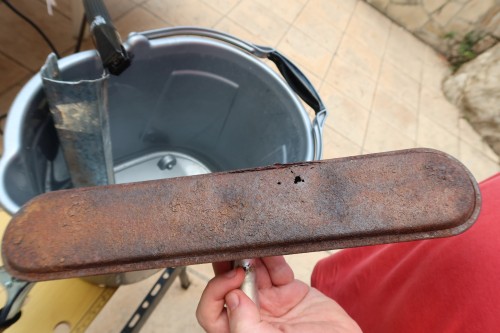
This is the piece of metal we need to put in the electrolysis.
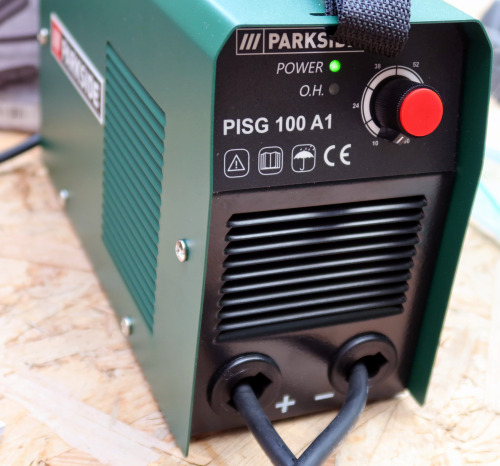
Here is our welding machine powered on and started the process.
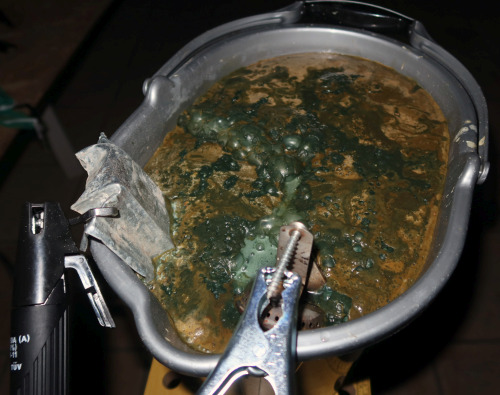
After electrolysis, all the rust went from the piece of metal we wanted to the other piece of metal.
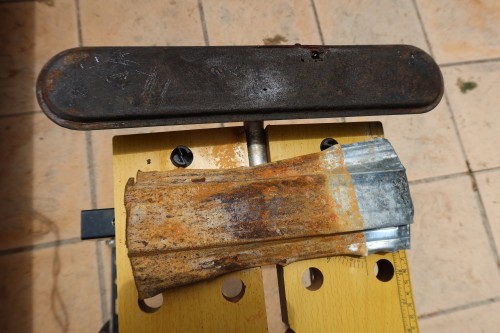
So the first metal is now clean from rust and the rust is now on the useless piece of metal.
